Best power racks and squat racks for 2026
Updated June 2026Independently researchedNo paid placement.
The Rogue RML-490C is our top pick for the best power rack, it’s compact, bombproof, and built for serious lifting.
The Titan T-3 offers nearly the same function at a budget-friendly price, while the Force USA G3 packs a rack and cable station into one space-saving unit for those who want versatility.
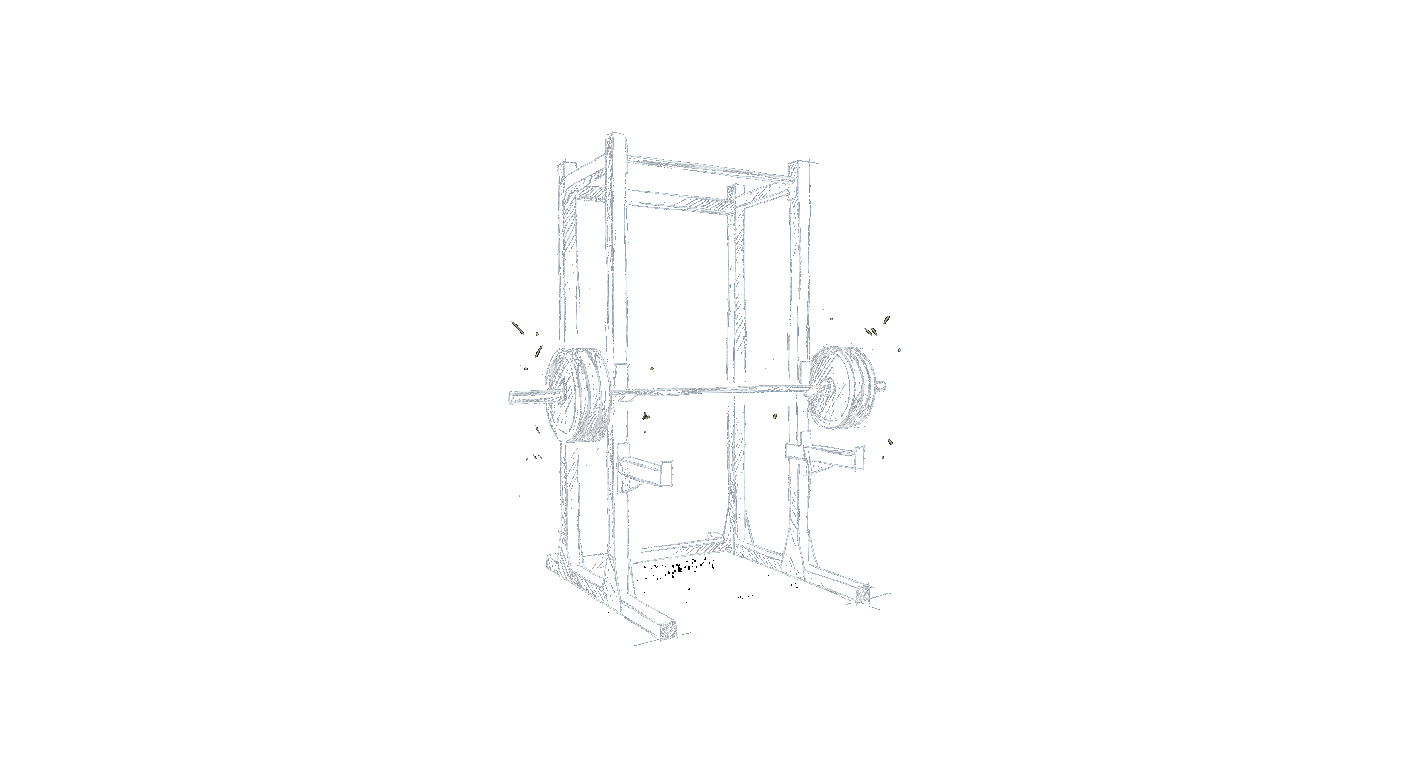
A power rack is the backbone of any home gym, it lets you squat, bench, and press safely without a spotter, and it opens up your training to dozens of barbell exercises. The right rack keeps you safe and lasts for decades, but the choices can be overwhelming: bolt-down vs. freestanding, 2x3 vs. 3x3 uprights, hole spacing, and add-ons like pull-up bars or plate storage all matter. To pick the best one for your space and budget, focus on three things: how much depth you have (most racks are 24 to 48 inches deep), your ceiling height (you need room to rerack), and whether you’ll ever want cables or a lat pulldown. We’ve researched owner feedback and expert reviews to narrow it down to three standout options that cover most home gyms.
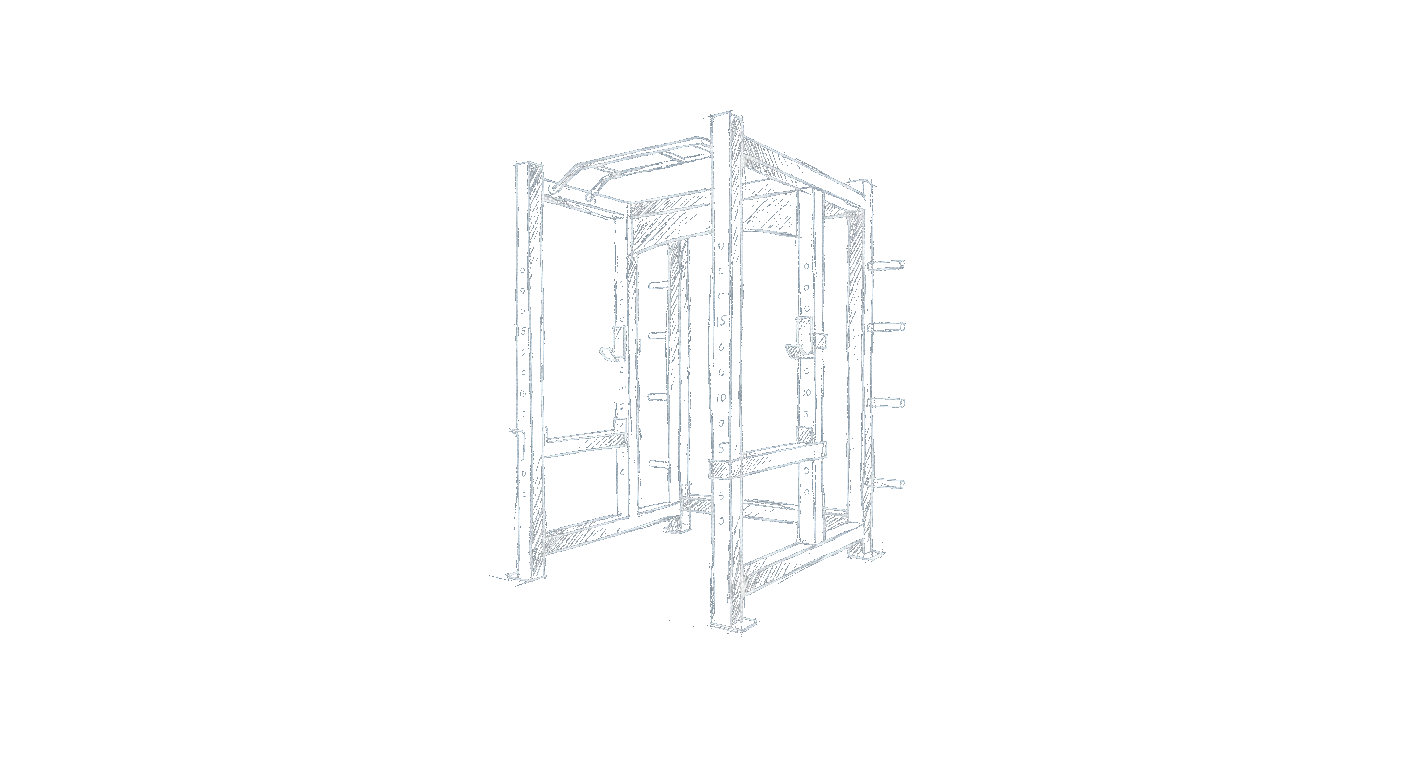
Rogue RML-490C Power Rack
the do-it-all default
4.8out of 5This is the rack that serious home gym owners dream of, it’s built like a tank, takes up very little floor space, and has the best hole spacing for adjusting J-hooks and safety bars. The trade-off is the premium price and that it needs to be bolted down for full stability.
Price range: $$$$
Check price on Amazon →Titan T-3 Power Rack
the value champion
4.5out of 5The Titan T-3 proves you don’t have to spend a fortune to get a sturdy power rack. It’s built from solid 11-gauge steel, accepts a ton of add-ons, and holds up well for most intermediate lifters. The finish isn’t as refined as the Rogue, and it can feel a little wobbly if you don’t bolt it down, but the bang for the buck is outstanding.
Price range: $$
Check price on Amazon →Force USA G3 All-In-One Trainer
the home gym in a box
4.6out of 5The Force USA G3 is a clever all-in-one that combines a power rack with a functional trainer, lat pulldown, low row, and cable crossovers all in one unit. It’s great for small spaces where a separate rack and cable machine won’t fit. The compromises are a shallow 24-inch rack depth (tight for squats) and cable pulleys that aren’t as smooth as standalone units.
Price range: $$$
Check price on Amazon →| Award | Model | Our score | Price | Best for | |
|---|---|---|---|---|---|
| Best overall | Rogue RML-490C Power Rack | 4.8 / 5 | $$$$ | Lifters who want a compact, rock-solid rack and are willing to drill into their concrete o | Check price → |
| Runner-up | Titan T-3 Power Rack | 4.5 / 5 | $$ | Budget-conscious lifters who want a solid, expandable rack without spending four figures. | Check price → |
| Best value | Force USA G3 All-In-One Trainer | 4.6 / 5 | $$$ | Home gym owners with limited floor space who want both a squat rack and cable-based exerci | Check price → |
The picks in detail
1. Rogue RML-490C Power Rack: the do-it-all default
Best overallThis is the rack that serious home gym owners dream of, it’s built like a tank, takes up very little floor space, and has the best hole spacing for adjusting J-hooks and safety bars. The trade-off is the premium price and that it needs to be bolted down for full stability.
Pros
- 3x3” 11-gauge steel uprights are extremely rigid
- Westside hole spacing (1” centers) gives fine adjustment
- Compact depth saves floor space
- Made in the USA with excellent powder-coat finish
Cons
- Requires bolting to the floor (no freestanding option)
- Does not include a chin-up bar or plate storage
- Premium price limits it to committed lifters
Who it’s for
Lifters who want a compact, rock-solid rack and are willing to drill into their concrete or wood floor for maximum stability.Who should skip it
You’re on a tight budget or you don’t want to bolt a rack down, look at the Titan T-3 instead.2. Titan T-3 Power Rack: the value champion
Runner-upThe Titan T-3 proves you don’t have to spend a fortune to get a sturdy power rack. It’s built from solid 11-gauge steel, accepts a ton of add-ons, and holds up well for most intermediate lifters. The finish isn’t as refined as the Rogue, and it can feel a little wobbly if you don’t bolt it down, but the bang for the buck is outstanding.
Pros
- Very affordable for a full-size power rack
- Wide range of compatible attachments (dip bars, landmine, etc.)
- 11-gauge steel is plenty strong for 400+ lb lifts
- Can be used freestanding or bolted
Cons
- Powder-coat finish chips more easily than pricier racks
- Standard 2” hole spacing makes fine adjustments harder
- Some wobble when not bolted to the floor
Who it’s for
Budget-conscious lifters who want a solid, expandable rack without spending four figures.Who should skip it
You need a compact footprint or want the convenience of Westside hole spacing, those features cost more.3. Force USA G3 All-In-One Trainer: the home gym in a box
Best valueThe Force USA G3 is a clever all-in-one that combines a power rack with a functional trainer, lat pulldown, low row, and cable crossovers all in one unit. It’s great for small spaces where a separate rack and cable machine won’t fit. The compromises are a shallow 24-inch rack depth (tight for squats) and cable pulleys that aren’t as smooth as standalone units.
Pros
- Integrated lat pulldown and low row save lots of space
- Comes with J-hooks, safety catches, and pull-up bar included
- Sturdy steel frame with a compact footprint
- Great for mixing barbell and cable exercises in one workout
Cons
- Only deep, tight for reracking heavy squats
- Cable pulley friction is noticeable at high weights
- Not suitable for heavy rows or dedicated powerlifting
Who it’s for
Home gym owners with limited floor space who want both a squat rack and cable-based exercises like pulldowns and rows.Who should skip it
You’re a committed powerlifter who needs a full 30-inch or deeper rack for heavy squats and benches.Best for specific needs
Best for serious strength training
If you’re chasing big numbers on squat, bench, and deadlift, you need a rack that won’t flex or rattle under heavy loads. The Rogue RML-490C’s 3x3-inch uprights and close hole spacing let you dial in the perfect safety-bar height, and its compact depth doesn’t sacrifice stability. This is the rack that will outlast every other piece of gear in your gym. Our pick: Rogue RML-490C Power Rack.
Best for budget-first buyers
Not everyone needs a rack, and the Titan T-3 proves you can get 90% of the function for half the price. It uses the same heavy-gauge steel as premium racks, accepts a wide range of attachments, and can be set up freestanding if you don’t want to drill into your floor. It’s the smart pick for lifters who want to save money for a good barbell and plates. Our pick: Titan T-3 Power Rack.
Best for small spaces with cable needs
When you only have a corner of a basement or a spare bedroom, the Force USA G3 is a brilliant space-saver. It gives you a squat rack, pull-up bar, lat pulldown, low row, and even cable crossovers in one frame. The 24-inch depth is tight for some squat styles, but for mixed training it’s hard to beat the versatility in such a small footprint. Our pick: Force USA G3 All-In-One Trainer.
Our verdict
If you have the floor space and budget, the Rogue RML-490C is the rack to beat, it’s the investment that will never need an upgrade. For everyone else, the Titan T-3 delivers near-identical utility for a fraction of the cost, and the Force USA G3 is a clever pick for lifters who want cable exercises without buying a second machine. Whichever you choose, bolt it down and start lifting safely.
Frequently asked questions
What is the difference between a power rack and a squat stand?
A power rack is a full four-post (or six-post) cage with safety bars that catch the barbell if you fail a lift, making it the safest choice for training alone. A squat stand is a lighter two-post frame that takes less space and money but offers less fail-safety. For solo lifting, a full rack is worth the footprint.
What gauge steel should a power rack be?
Heavier-duty racks use 11-gauge steel uprights, which are stiffer and rated for more weight; many solid value racks use 12- or 14-gauge, which is plenty for typical home loads. Thicker steel matters most for very heavy lifters or anyone planning to bolt on attachments and a pull-up bar.
Do I need to bolt my power rack to the floor?
Not always. Heavier racks with a wide footprint are stable unbolted for most lifters, while taller or lighter racks, or anyone doing kipping pull-ups and rack pulls, benefit from bolting down or adding a weighted base or flat-foot stabilizers. Check the manufacturer's guidance for your model and use.
What hole spacing is best on a power rack?
Westside spacing (1-inch holes through the bench-press range) lets you set the safeties and j-hooks at precise heights, which is helpful for benching and partial lifts. Standard 2-inch spacing elsewhere is fine. The dense spacing only really matters in the pressing zone.
Will a power rack fit in a garage with a low ceiling?
Many racks are around 80 to 93 inches tall, so measure your ceiling first. Shorter racks and ones with flat tops exist for low garages, but remember to allow extra height for pressing overhead and for a pull-up bar you can actually hang from.