Free weights vs machines
Updated June 2026Independently researchedNo paid placement.
For results, free weights typically deliver more functional strength and muscle activation, but machines offer safer isolation and easier progression when training alone. The smartest home gym usually includes a mix of both, with free weights as the core and one or two machines to fill gaps.
What are the main differences between free weights and machines?
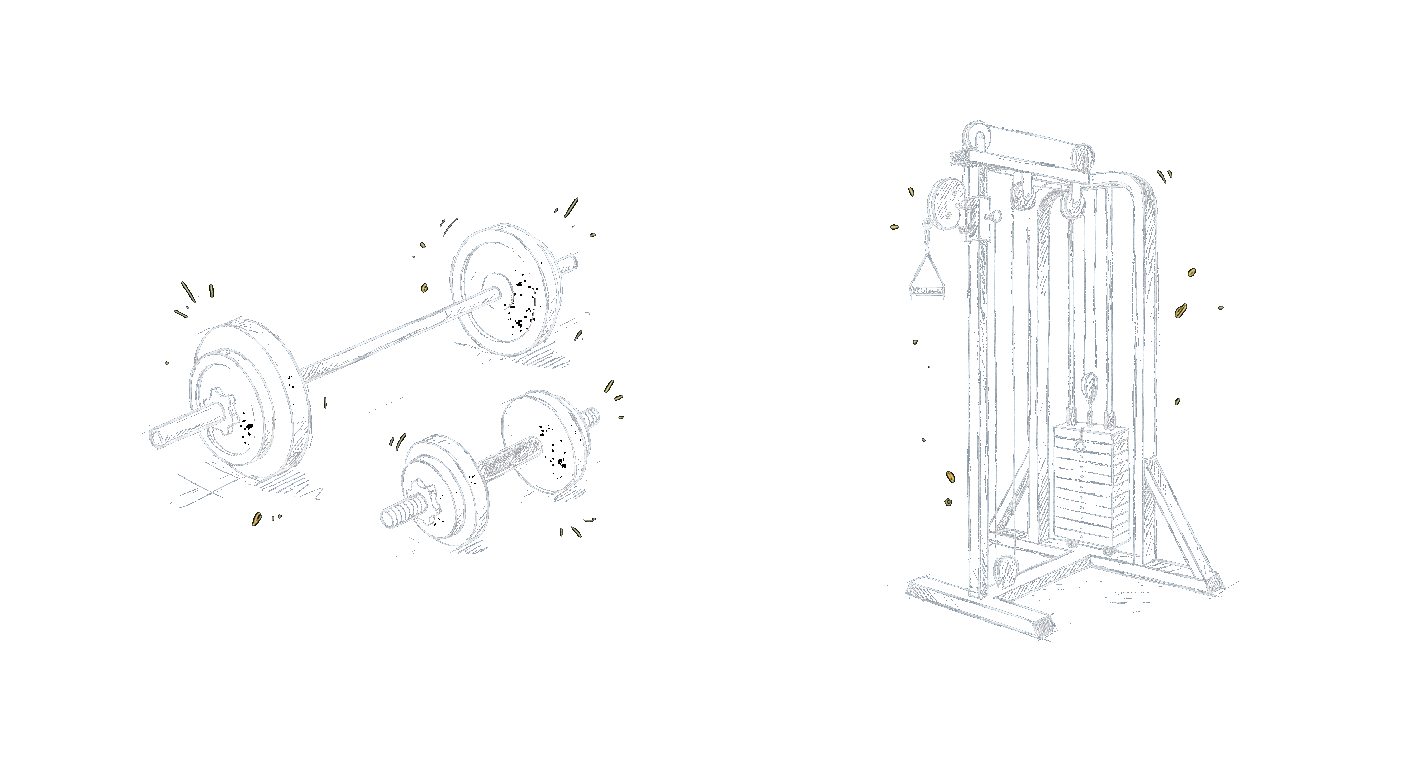
Free weights, dumbbells, barbells, kettlebells, require your stabilizer muscles to control the weight through every plane of motion. That builds coordination and real-world strength, but it also means form mistakes are more likely. Machines, like a plate-loaded leg press or cable tower, lock you into a fixed path, making it easier to target a specific muscle without worrying about balance. Which one gives better results? It depends on your goal. If you want raw strength and muscle that carries over to sports or daily life, free weights win. If you’re recovering from an injury or want to safely push a muscle to failure without wobbling, a machine is hard to beat. Both can build muscle. The key difference is the learning curve and how much your core and stabilizers work. Most experienced lifters end up using both.
Which is safer for solo training at home?
Training alone means no one is there to hand you a heavy barbell off your chest or catch you if you lose control. Free weights pose a real risk of being pinned under a bar, especially on bench press or squats. You can mitigate that with a power rack and spotter arms, but that adds cost and space. Machines, on the other hand, let you bail out safely, most have a weight stack or pin that stops the movement if you let go. For someone training at home without a partner, machines generally feel safer for heavy leg work or overhead pressing. Free weights are perfectly safe for most accessories (curls, rows, lateral raises) and for dumbbell exercises where you can simply drop the weight. For bench press and squats, a machine like a hack squat or chest press machine is much more forgiving. Bottom line: if safety alone is your top concern, prioritize machines. If you’re willing to learn good form and invest in safety equipment, free weights are still manageable.
How much space and money do you actually need?
A basic free-weight setup, an adjustable bench, a pair of dumbbells from light to heavy, and maybe a barbell with plates, fits in a small corner of a garage or spare room and is very budget-friendly. You can start with a single set of adjustable dumbbells for a few hundred dollars. A barbell and weight plates cost a bit more but give you a huge range of exercises. Machines are the opposite. A single large machine like a lat pulldown or leg press can eat up an entire wall of your gym and cost significantly more. A compact cable tower or a half-rack with a built-in pulley system strikes a middle ground but still demands more floor space and cash. If you’re tight on room and money, free weights are the obvious choice. If you have the space and a bigger budget, adding one or two machines can round out your training without overwhelming your home.
Can you build muscle effectively with just one type?
Yes, you can absolutely build muscle with only free weights. Progressive overload, adding weight or reps over time, works exactly the same on a barbell as it does on a machine. Many people have built impressive physiques with nothing but dumbbells and a bench. The main limitation is that some muscles are harder to target with dumbbells alone, like your lats (rows and pull-ups help), but you can still get great results. Machines make isolation easier. A leg extension machine will fry your quads with zero balance work, which can be a good thing if you want to exhaust a specific muscle. But you lose the stabilizer activation that free weights provide. If you rely only on machines, you may miss out on some core and grip strength. For most people, sticking to one type long-term will work fine, but a mix is more versatile and helps avoid plateaus.
What’s the ideal mix for a home gym?
The sweet spot for most home gyms is a free-weight base with one or two carefully chosen machines. Start with an adjustable bench, a set of dumbbells (or a barbell and plates), and a pull-up bar. That covers pressing, pulling, squatting, and curling. Then add a machine that addresses a weakness or improves safety: a cable tower for face pulls and lat work, or a leg press for heavy leg training without a spotter. If space is tight, a single piece like a multi-gym with a weight stack can replace several machines, but it won’t match the feel of a real barbell for compound lifts. A power rack with a pulley system does both roles, it gives you a spot for squats and bench press while also offering cable exercises. Aim for balance: free weights for compound lifts (squats, presses, rows) and machines for isolation and safe failure sets (leg extensions, triceps pushdowns, calf raises).
Should beginners start with machines or free weights?
Absolute beginners often benefit from starting with machines because they lock you into the correct movement path, reducing the risk of bad habits. You can learn the feeling of a muscle working without worrying about balance. That said, you won’t learn how to stabilize or brace, which is critical for free-weight lifts. A better approach for beginners is to learn on both early. Use machines to get comfortable with basic movements, then gradually introduce dumbbells and a barbell at light weights. Many home gym starters buy a cheap set of dumbbells and a bench and do just fine, as long as they watch form videos and start light. Don’t let the choice freeze you. Either option will build muscle if you train consistently and progress over time. The best beginner setup is the one you’ll actually use.
Frequently asked questions
Can I build a big chest with just dumbbells and no bench press machine?
Yes, dumbbell flat and incline presses are excellent for chest growth. You can also add flyes and pushups. A machine isn’t necessary, but it can help you safely go to failure on presses without a spotter.
Are cable machines worth the space and cost for a home gym?
A cable machine is one of the most versatile single pieces: you can do lat pulldowns, rows, triceps pushdowns, bicep curls, face pulls, and more. If you have the room and budget, a cable tower or a functional trainer is a great addition. If space is tight, a band-based pulley system or a doorway cable attachment can work for less.
Do I need a spotter for free-weight training at home?
For heavy bench press and squats, a spotter is strongly recommended. Without one, use a power rack with spotter arms or stick to dumbbells that you can drop. Machines eliminate the need for a spotter entirely on most exercises.
How much weight should a beginner start with for dumbbells?
Start with a weight you can control for 10–12 reps with good form, not max effort. A set of adjustable dumbbells that go from very light to moderately heavy (like 5–50 pounds per hand) is ideal because you can progress gradually without buying multiple pairs.
Can I get a full-body workout with just one machine?
Yes, a well-designed cable machine or a multi-gym with a lat pulldown, row, and leg extension/curl can work every major muscle group. However, you may miss some functional movements like deadlifts. Supplementing with bodyweight exercises helps.
Which type is better for burning fat and losing weight?
Both are effective when paired with a calorie deficit. Free weights may burn slightly more calories per session because they engage more stabilizer muscles, but the difference is small. Pick the type you enjoy most so you stick with it long term.