Best blender accessories
Updated June 2026Independently researchedNo paid placement.
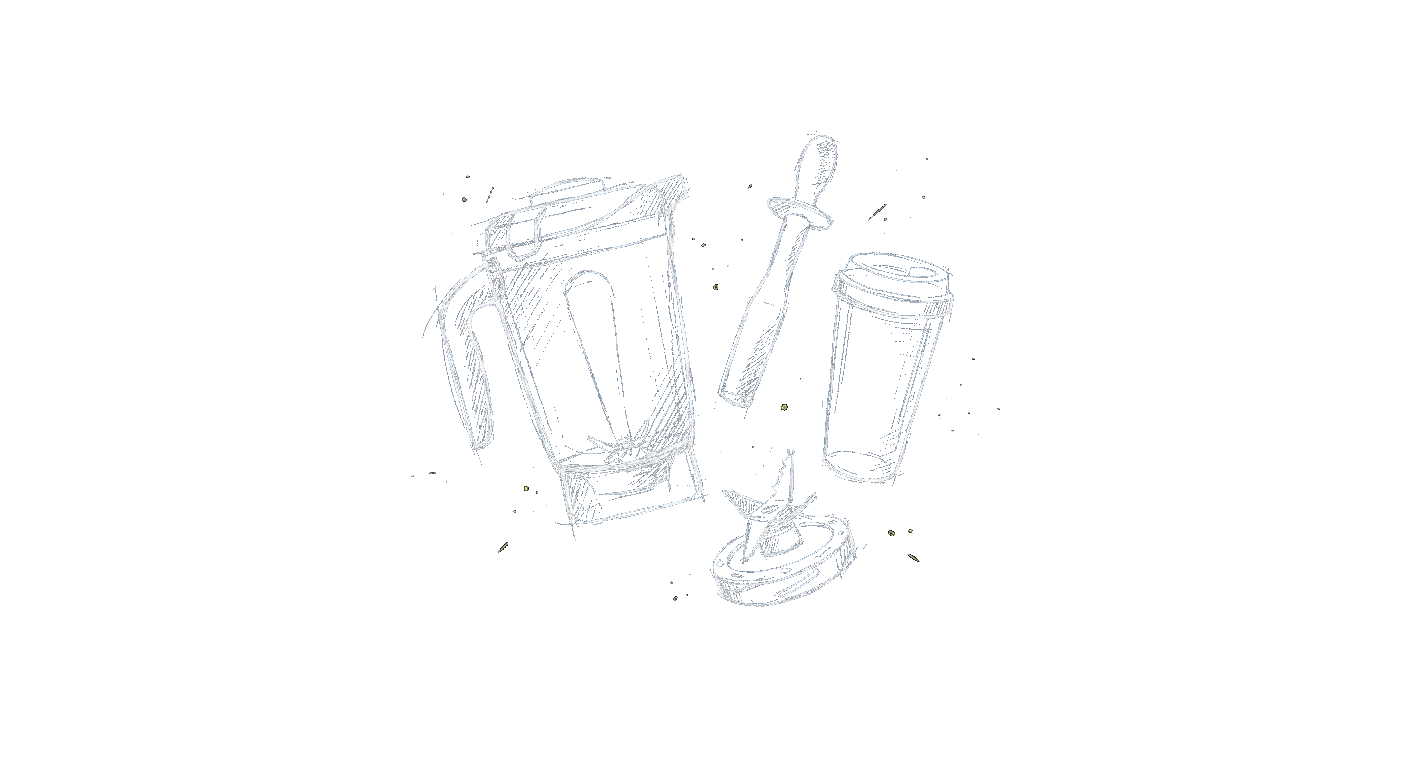
The best blender accessories are extra containers in varied sizes, a sturdy tamper for thick blends, and leak‑proof to‑go cups—but only if they match your actual blending habits. Replacement blade assemblies and gaskets extend the life of your machine without buying a whole new blender, while specialty blades for dry grains or frozen desserts are worthwhile upgrades for serious home cooks.
Which extra container sizes are worth adding?
An extra container lets you keep one pitcher for daily smoothies and another for soups or sauces without cross‑flavor residue. Many blender brands sell personal‑sized jars (often around 20 ounces) that use the same blade base, which is perfect for single servings or portable blending. Larger containers, like 64‑ounce or 72‑ounce jars, are great for batch prep or entertaining. The biggest consideration is material. Plastic jars are lighter and shatter‑resistant but can scratch and retain odors over time. Glass containers stay clearer and don’t absorb smells, though they add weight. Tritan or copolyester options offer a middle ground. Before buying, check that the container fits your blender’s blade assembly and motor base—some brands use proprietary threading. If you often make both single smoothies and large batches, a two‑container set (one medium, one personal) is the most versatile upgrade. For occasional use, a budget‑friendly extra jar in your most‑used size is enough.
Do you really need a tamper? When it matters.
A tamper is essential for thick mixtures like nut butters, frozen fruit blends, or green smoothies with tough fibers. It pushes ingredients into the blades without having to stop and shake the jar, which can be a mess. Most high‑performance blenders include a tamper, but if yours didn’t, buying one can improve your blending consistency dramatically. Look for a tamper that fits the lid opening snugly and has a blunt, rounded tip—sharp edges can scratch the pitcher. Some are designed with a “twist‑and‑press” action that works with the vortex. If you rarely blend thick recipes, a tamper isn’t necessary; for daily thick smoothies or nut butters, it’s a small investment that saves frustration. Note that not all blenders are compatible with a tamper. Models with a two‑piece lid that has a removable center cap allow tamper use, while one‑piece lids usually don’t. Check your blender’s lid design before buying.
Should you replace the blade assembly or buy a whole new blender?
Replacing a blade assembly is often a smart, budget‑friendly move if your blender is otherwise in good shape. Dull blades reduce performance and can leave unblended chunks, but a new set restores original chopping power. Many major brands sell official replacement assemblies for models that are still in production. However, if the motor feels weak, the base wobbles, or the jar is cracked, a new blender is usually more cost‑effective. Blade assemblies alone can cost a few tens of dollars to nearly a hundred, depending on the brand. Compare that to the price of the full blender—sometimes a replacement is half the cost of a new machine. Also consider age. If your blender is several years old and the company has changed the blade design, replacements may be hard to find. In that case, a new blender offers better technology and warranty coverage. For well‑maintained machines under warranty, go with an official blade assembly.
Are to‑go cups and lids a smart upgrade?
To‑go cups turn your blender into a portable smoothie station. Most systems include a cup that screws onto the blade base, allowing you to blend directly in the cup, then switch to a leak‑proof travel lid. This saves washing a full pitcher and is great for busy mornings. The main trade‑off is capacity. Typical to‑go cups hold 16 to 24 ounces, which is fine for one serving. If you blend for two people, you’ll still need the full pitcher. Also check that the cup material is durable (tritan or BPA‑free plastic) and that the lid seals well—reviews often mention leaking at the seal after months of use. Many brands offer multipacks of cups and lids, which can be worthwhile if you prep several smoothies at once. For occasional use, a single cup and lid set is enough. Avoid third‑party cups unless you can verify they fit your blender’s blade base—threads vary widely.
Which gaskets, seals, and lids should you keep on hand?
Gaskets and seals are small, inexpensive parts that prevent leaks and keep the blender airtight. Over time, the rubber gasket under the blade assembly can dry out, crack, or get misshapen, causing liquid to seep from the bottom of the jar. Replacing it is a quick fix that costs far less than a full jar or blender. Similarly, the main lid and its vent cap can warp or crack after repeated use and dishwasher cycles. A tight seal is crucial for safety when blending hot liquids. Some manufacturers sell lid‑and‑gasket kits as a set. It’s smart to keep one spare gasket and lid in your pantry if you use your blender heavily, especially for hot soup recipes. For models with a separate die‑cut gasket, make sure you buy the exact size for your blender model. Generic rings rarely fit properly. Check the brand’s official parts page or contact customer support with your blender’s model number.
What about specialty blades for dry grains and frozen desserts?
Some blenders offer interchangeable blade assemblies designed for specific tasks, such as a dry‑grind blade for grains, spices, or coffee beans, or a “frozen dessert” blade that handles hard‑frozen fruit and ice cream mixtures. These blades often have a different shape or thicker metal for tougher jobs. The advantage is that you don’t risk dulling your general‑purpose blade on hard items. However, these specialty blades are only worth it if you regularly grind your own flours or make sorbets and ice creams. For most users, the standard blade handles all tasks well enough, especially in high‑power models. Also be aware that switching blades may require a different jar base or an adapter, adding cost and complexity. Before buying, confirm that the specialty blade fits your blender and that the intended use is clearly outlined by the manufacturer. For occasional use, skip this upgrade; for dedicated home bakers or healthy snack makers, it can be a game changer.
Frequently asked questions
Can I use a different brand’s container on my blender base?
Usually not. Threading, locking tabs, and blade alignment are often brand‑specific. Even within the same brand, containers from different model lines may not fit. Stick to official containers or well‑researched third‑party ones with verified compatibility.
How often should I replace the blender blade assembly?
Every 12 to 18 months with regular use, or sooner if you notice visible dulling, chips, or a clear drop in blending performance. Signs include struggling with frozen fruit or leaving larger chunks. Replace the blade only with one from the original manufacturer to ensure safety.
Are stainless steel blender containers better than glass or plastic?
Stainless steel is very durable, doesn’t stain or retain odors, and keeps contents cold longer. However, it’s opaque so you can’t see the blend, and it’s typically more expensive. Glass is clear and heavy, while plastic is lighter but less durable. The “best” depends on your priorities: steel for longevity, glass for visibility, plastic for weight.
What’s the best tamper design?
A tamper with a comfortable, non‑slip handle and a rounded tip that fits the lid opening without scraping the pitcher walls is ideal. Some have a small ring that stops the tamper from touching the blades. If your blender came with one, it’s usually the best fit; otherwise, buy from the same brand to ensure compatibility.
Do I need extra gaskets or seals right away?
Not immediately, but they’re a good thing to have on hand if you use your blender several times a week. Gaskets wear out over time and can cause leaks. Buying a spare set early means you won’t be stuck searching for a replacement when a leak appears. Check your model’s typical lifespan—some brands sell multi‑packs of gaskets.
Are to‑go cups worth it if I only blend smoothies occasionally?
They can still be convenient because they reduce cleanup: just blend, swap caps, and go. But for very occasional use, the cost of a set may not justify itself. If you make a smoothie once a week, you can simply use a regular jar and pour into a separate cup. For daily users, the time saved is worth the investment.