Blender vs food processor
Updated June 2026Independently researchedNo paid placement.
If you mostly make smoothies, soups, and sauces, you need a blender. If you chop, shred, and knead dough, you need a food processor. Many home cooks can get by with just one if they choose a versatile model and work around its limits, but owning both covers nearly every kitchen task without compromise.
What does a blender do best?
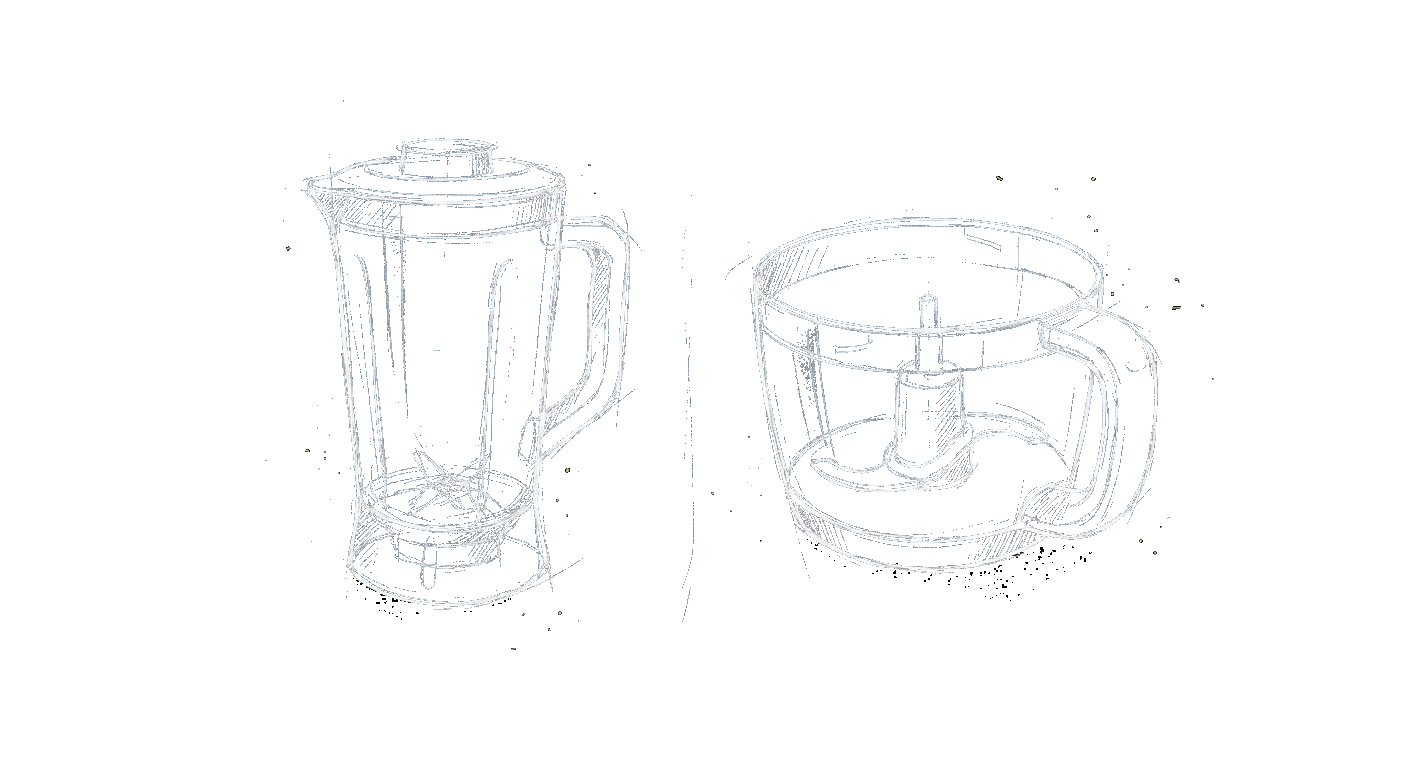
The blender is purpose-built for wet jobs. Its tall, narrow jar creates a powerful vortex that pulls ingredients down into the blades, making it exceptional at liquefying fruits, crushing ice, and creating silky smooth soups, sauces, and nut milks. High-performance blenders achieve the fine emulsion that food processors can’t replicate, so if your daily routine involves smoothies, protein shakes, or creamy dressings, a blender is the obvious choice. That said, blenders struggle with dry ingredients and small batches. Chopping a single onion or a handful of nuts often results in uneven pieces or a messy puree. The narrow jar also makes it difficult to scrape down sides when working with thick or stiff mixtures. Those limitations define the blender’s lane: fluid, high-moisture tasks where smoothness matters most.
What does a food processor do best?
The food processor excels at dry, solid jobs where you want control over texture. Its wide, shallow bowl and multiple blade attachments allow you to chop, slice, shred, and even knead dough with consistent results. A good food processor turns out uniform salsa, perfect pie crust, and finely ground nuts without turning them into butter. It also handles large volumes of ingredients at once, making it indispensable for meal prep, coleslaw, or grating blocks of cheese. Where a food processor falls short is thin liquids. The design of its lid and feed tube means that runny contents can leak, and it can’t achieve the vortex needed to aerate or emulsify. Pureeing a soup in a food processor works if you’re careful, but you’ll never get the velvety finish a blender delivers. The food processor is a workhorse for dry tasks but a poor substitute for a blender when it comes to drinks and soups.
Where do blenders and food processors overlap?
There is a middle ground where both appliances can get the job done, though each with trade-offs. Nut butters, hummus, pesto, and baby food are common crossover tasks. A blender will yield a very smooth, almost silky result, while a food processor gives you more control over chunkiness and is easier to scrape down for thick mixtures. Similarly, both can handle frozen fruit, but a blender is better at turning it into a drinkable smoothie, whereas a food processor will create a thick sorbet-like consistency that may need extra liquid. Where the overlap ends is speed and convenience. For a liquid-heavy recipe like a strawberry-banana smoothie, a blender is faster and cleaner. For a chunky salsa or a batch of dough, the food processor wins. Recognizing these nuances helps you decide which appliance to reach for, and whether you truly need both on your counter.
Can you get by with just one machine?
It depends on your top five most common kitchen tasks. If you blend daily smoothies, make soups, and occasionally chop nuts, a high-performance blender (such as those from Vitamix or Blendtec) can handle light food processor duties like mincing garlic or grinding small amounts of nuts. Some models even come with a narrower blending jar that works for smaller batches. But you’ll struggle to shred a block of cheese or slice a pile of carrots evenly in a blender. Conversely, if you cook from scratch and often chop vegetables, knead dough, or make dips, a food processor can fake a smoothie if you add enough liquid, but the result will be thicker and less aerated. For occasional blending, an immersion blender might be a better space-saving companion. The honest answer: if your budget and counter allow, both machines serve distinct roles. But for smoothie lovers who rarely chop large volumes, a capable blender alone may cover 80% of your needs.
How to choose based on your kitchen size and budget?
Counter space and cost often dictate the decision. A full-size blender typically has a tall footprint but a narrow base, so it fits in tight spots. Food processors take up more depth, you need room to lift the lid and access the bowl. If you have limited space, an immersion blender is a versatile alternative for purees and soups, though it can’t chop or shred. For budget-conscious buyers, both categories offer reliable entry-level models that cover the basics without breaking the bank. A mid-priced blender or food processor often provides enough power and durability for most households; premium models add build quality and warranty support, not magical abilities. Think about the counter space you can free up. If you store appliances in cabinets, think about weight and portability. A food processor’s heavy bowl and multiple discs can be a hassle to haul out for quick tasks, whereas a blender often lives on the counter because it’s used daily. Let your actual cooking routines, not just aspirational recipes, guide the decision.
Frequently asked questions
Can I chop vegetables in a blender?
Yes, but only in small batches and with careful pulsing. The narrow jar tends to overload and puree the bottom pieces while leaving larger chunks on top. A food processor is much more consistent for chopping.
Can I make smoothies in a food processor?
You can, but the result will be thicker and more slushy than a blender. You’ll need to add extra liquid and the wide bowl makes it harder to achieve a vortex. It works in a pinch, but a blender is far better.
Which is better for nut butters, a blender or a food processor?
Both can make nut butter, but the texture differs. A blender produces a very smooth, pourable butter while a food processor gives you more control and a slightly coarser, easy-to-scrape result. If you make large batches, a food processor is often easier to manage.
Do I need both a blender and a food processor if I bake often?
A food processor is essential for cutting butter into flour, making pie crust, and kneading small doughs. A blender isn’t useful for those tasks. If you bake regularly, prioritize a food processor; you can get by with an immersion blender for occasional smoothies or sauces.
Which appliance takes up more counter space?
Blenders are tall but have a small footprint, so they often fit under cabinets. Food processors are shorter but wider, requiring more depth and often a dedicated spot. Measure your available space before buying.
Can a blender knead bread dough?
Only certain high-powered blenders with a special dough blade can handle small batches of dough, but it’s not ideal. The narrow jar limits the amount of dough and stresses the motor. A food processor is far more capable and reliable for dough.