Espresso accessories that actually help
Updated June 2026Independently researchedNo paid placement.
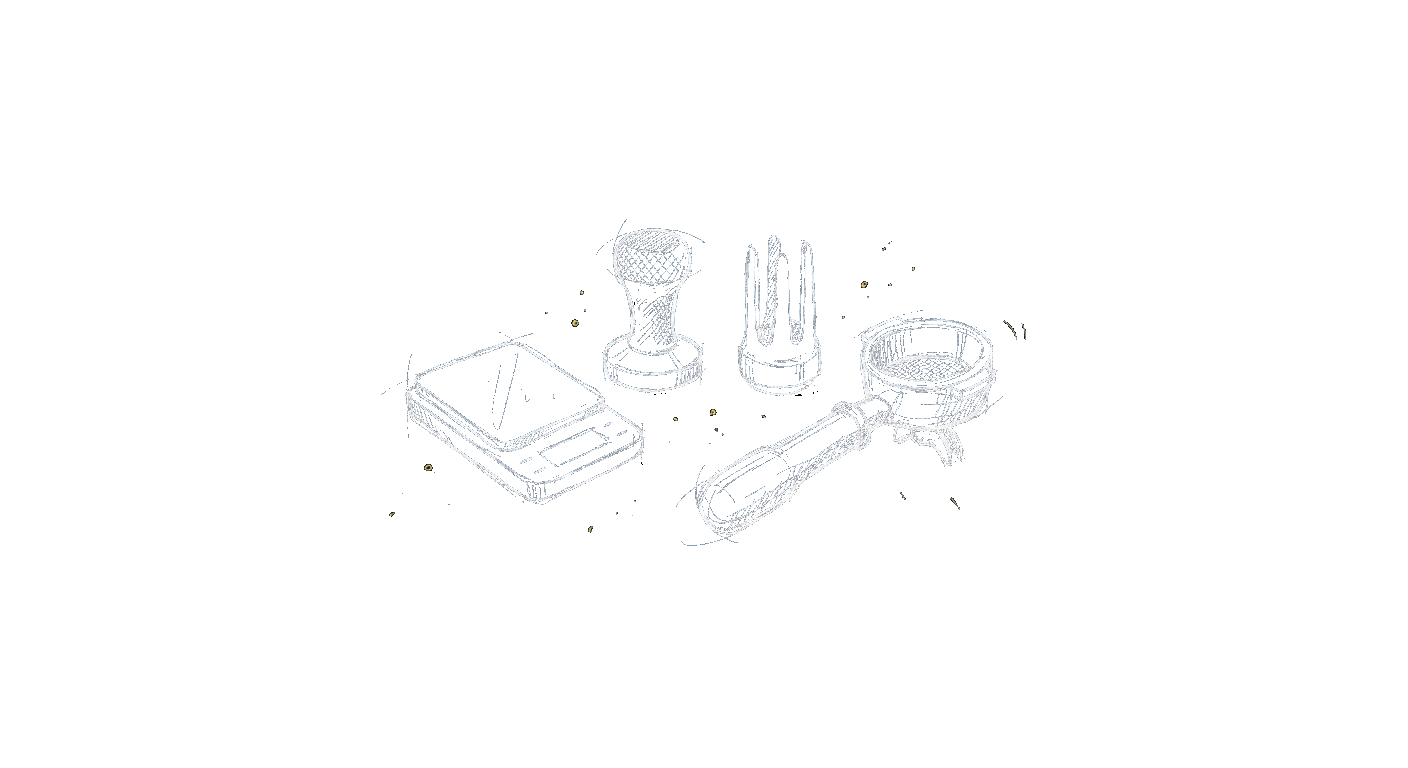
The accessories that actually improve your espresso shots are the ones that give you more control over puck prep and consistency: a quality tamper that fits your basket, a WDT tool to break up clumps, and a precise scale. Items like bottomless portafilters or fancy distribution tools are mostly nice to have, they help diagnose problems or add convenience, but they won’t fix a bad grind or stale beans.
Does the tamper matter that much?
Yes, more than many beginners expect. A tamper that is the exact diameter of your filter basket, usually 58 mm for standard espresso machines, ensures an even, level tamp without leaving gaps along the sides. Cheap plastic or oversized tampers often lead to uneven extraction. A good tamper doesn’t have to be expensive. A well-machined stainless steel or cast-iron tamper with a flat base (not convex) will give you consistent pressure and a level surface. The key is weight and handle comfort, not branding. A tamper that feels solid in your hand and matches your basket size is a genuine upgrade over the plastic scoop that comes with many machines.
Why a WDT tool is worth the hype
A Weiss Distribution Technique (WDT) tool, basically a set of thin wires or needles, breaks up clumps and redistributes coffee grounds evenly before tamping. This simple step dramatically reduces channeling, which is the main cause of sour or bitter shots. Owner feedback across forums consistently shows that adding a WDT tool improves shot-to-shot consistency more than almost any other low-cost accessory. You can buy a purpose-made tool for a very affordable price, or even make your own with acupuncture needles and a cork. The cost is negligible for the improvement in extraction uniformity. If you grind fresh and are still getting uneven pours, a WDT tool is a low-risk fix.
Should you buy a distribution tool or leveler?
Most expert reviews and experienced home baristas caution against relying on spring-loaded levelers or spin-levelers. While they can help spread grounds, they often compress the puck unevenly or push fines toward the edges, leading to channeling. A simple WDT tool followed by a careful tamp is generally more reliable. That said, some higher-end levelers with sharp, adjustable blades have a reputation for gentle, even distribution. If you struggle with technique, a well-reviewed leveler from a reputable brand can be a nice-to-have convenience tool, but it’s not a magic bullet. For most users, the money is better spent on a better basket or a scale.
Why a scale is non-negotiable for consistency
Espresso is a ratio game: grams of ground coffee in versus grams of liquid out. Guessing the yield by eye is a sure path to inconsistent shots. A small, responsive scale that fits under your machine’s drip tray is one of the most impactful accessories you can buy. It lets you dial in your recipe precisely and repeat it. The good news is that you don’t need a feature-packed smart scale. A basic model with 0.1-gram resolution, a timer, and a compact footprint works perfectly. Many budget-friendly options are praised for their durability. A scale pays for itself in saved beans and fewer wasted shots.
Bottomless portafilters: diagnostic tool or everyday upgrade?
A bottomless (naked) portafilter is less about making better shots and more about seeing what your current technique is doing wrong. With a bottomless PF, you can spot channeling, spraying, or uneven extraction in real time. For advanced users, it’s an invaluable diagnostic aid. For daily use, many baristas stick with a standard spouted portafilter because it’s less messy and easier to split into two cups. The upgrade is primarily educational. If you’re happy with your shot quality and just want an easier clean-up, a bottomless PF is a nice-to-have, not a must.
Are precision baskets a worthwhile upgrade?
The basket that comes with most entry to mid-level espresso machines often has uneven hole patterns or burrs, which can cause channeling. A precision basket from a respected brand, with laser-cut holes and consistent geometry, can noticeably improve extraction evenness. Many owner reviews report easier dialing-in and better clarity in the cup after switching. They are a moderately priced upgrade (typically in the lower double digits) and can last for years. If you’ve already dialed in your grinder and are hitting a wall with shot quality, a precision basket is one of the strongest improvements you can make. Combine it with a correct dose and a WDT tool, and you’ll get results close to café quality.
Frequently asked questions
Do I need a bottomless portafilter to make good espresso?
No. A bottomless portafilter is mainly a diagnostic tool to help you see channeling and improve your technique. You can make excellent espresso with the standard spouted portafilter that came with your machine.
Is a dosing cup worth buying?
A dosing cup makes it easier to transfer ground coffee from your grinder into the portafilter without spilling, and it can help reduce mess. It’s a convenience item, nice to have but not essential. Many people use the cup that came with their grinder or simply put the portafilter directly under the grinder chute.
What about a puck screen? Do they improve shot quality?
Puck screens sit on top of the coffee bed to improve water distribution and keep the group head cleaner. Some users report more even extraction and less channeling, while others find they add extra hassle and cost. The effect is subtle; they are more of a cleanup aid than a game-changing upgrade.
Should I buy a knock box or just use the trash can?
A knock box keeps your counter clean and makes disposal of spent pucks quick and tidy. It’s a workplace convenience, not a flavor or performance upgrade. A simple, budget-friendly knock box works just as well as an expensive one.
Are espresso cleaning products like backflush detergent necessary?
Regular cleaning and backflushing with a dedicated espresso machine detergent is essential for machine longevity and shot quality. Oily coffee residue builds up inside the group head and can stale your shots. A pack of cleaning powder is inexpensive and should be used weekly. This is more of a maintenance necessity than a luxury accessory.
Do I need a tamper with a leveling ring or spring mechanism?
Leveling rings and spring-loaded tampers are designed to help beginners achieve a level tamp, but many experienced users find them unnecessary once you develop a consistent technique. A flat, well-fitting tamper is usually sufficient. The improvement from a spring-loaded model is marginal for most people.