Burr vs blade grinder
Updated June 2026Independently researchedNo paid placement.
Burr grinders crush beans between two revolving surfaces, producing uniform particles that extract evenly and deliver a cleaner, more flavorful cup. Blade grinders chop unevenly, leading to bitter over-extraction and sour under-extraction in the same brew. Unless you are on a tight budget and drink coffee only occasionally, a burr grinder is the clear winner for anyone who cares about taste.
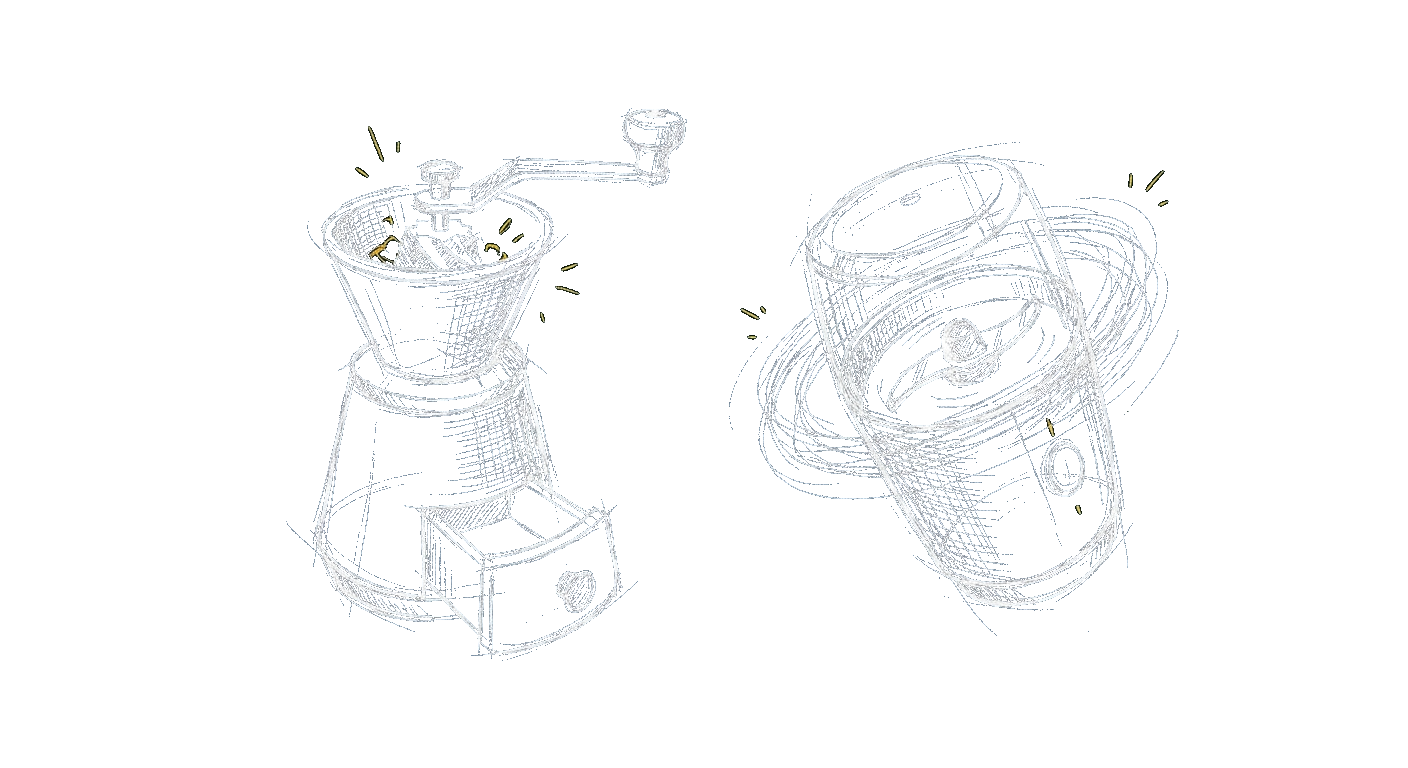
What's the difference between a burr and blade grinder?
A blade grinder works like a tiny food processor: a spinning propeller blade whacks the beans until they break into fragments. The result is a chaotic mix of fine dust and large chunks, because there is no mechanism to stop cutting once the particles reach a certain size. A burr grinder, by contrast, uses two abrasive surfaces (burrs) spaced a fixed distance apart. Beans are fed between them and crushed to a consistent size determined by that gap. This method produces particles that are nearly all the same size, which is the single most important factor for even extraction during brewing.
Why does grind consistency matter for taste?
When you brew coffee, water extracts soluble compounds from the grounds at a rate proportional to surface area. Fine particles extract quickly and can become bitter (over-extraction); coarse particles extract slowly and can taste sour or weak (under-extraction). A blade grinder’s uneven distribution means your brew contains both over-extracted and under-extracted grounds simultaneously, muddying the flavor. A burr grinder’s uniform particles allow you to dial in a precise extraction, highlighting the coffee’s natural sweetness, acidity, and aroma without the harsh or bitter notes.
When might a blade grinder be acceptable?
A blade grinder can be a reasonable choice if your budget is extremely tight and you are buying pre-ground coffee anyway, a blade grinder will still beat stale supermarket dust. It is also fine for the occasional cup from commodity beans where subtlety isn’t the goal. If you brew with a French press or cold brew, the uneven grind may be less noticeable because those methods are more forgiving of particle variation. Even so, a very affordable entry-level burr grinder will outperform any blade model for only a modest price increase. The real question is whether you value the ritual and flavor enough to spend a bit more.
How to choose the right burr grinder for your home
Burr grinders fall into two camps: flat burrs and conical burrs. Conical burrs are generally quieter, less prone to jamming, and easier to clean. Flat burrs are often praised for producing a slightly more uniform particle size, but they can be louder and require more careful alignment. For most home brewers, a good conical burr grinder from a reputable brand offers the best blend of value, reliability, and cup quality. Look for a model with a wide range of grind settings (many offer 30 to 40 steps) and a sturdy build. Entry-level electric burr grinders are surprisingly affordable, and manual hand-grinders with ceramic burrs can be even more budget-friendly while delivering exceptional consistency.
Can you improve a blade grinder's performance?
You can mitigate some of a blade grinder’s flaws by using short pulses instead of holding the button down, and by tilting or shaking the grinder between pulses to redistribute the beans. This helps avoid the largest chunks, but it still won’t achieve true uniformity. Another trick is to sift the grounds through a fine-mesh strainer to remove the powder, leaving the coarser bits for brewing. This wastes a portion of your coffee and adds a step, but it can produce a drinkable cup if you are stuck with a blade grinder. However, you will quickly find that even a very inexpensive burr grinder eliminates this hassle entirely.
What about manual vs electric burr grinders?
Manual burr grinders are compact, quiet, and often cost less than electric models while delivering the same grind quality. They require a bit of arm work (typically 30 seconds to a minute for a single brew), and the adjustment range may be narrower on very cheap models. Electric burr grinders offer convenience and speed, especially for larger batches or espresso dosing. They take up more counter space and can be noisier, but a solid electric model with metal burrs will last for many years. The choice really comes down to your tolerance for physical effort and how much counter space you have. Both beat any blade grinder hands down.
Frequently asked questions
Should I always buy a burr grinder?
Yes, if you care about making noticeably better coffee. Even an entry-level burr grinder from a known brand will produce a far more consistent grind than any blade model. The improvement in flavor is immediate and obvious.
Are blade grinders completely useless for espresso?
Practically yes. Espresso requires a very fine, uniform grind to build proper pressure. A blade grinder produces too many fines (which choke the machine) and too many boulders (which cause channeling). You cannot pull a decent shot with a blade grinder.
Can I use a blade grinder for French press?
You can, but expect a layer of muddy fines in your cup and a less clean body. French press is more forgiving than pourover, but a burr grinder still delivers a noticeably brighter, less gritty result.
What is the best budget-friendly burr grinder?
There are several solid options in the entry-level price band. Look for a brand known for quality home coffee gear, models with conical burrs and at least 30 grind settings tend to offer the best value. Avoid the very cheapest no-name units, which may have plastic burrs that wear quickly.
Do conical or flat burrs make better coffee?
Both can produce excellent results. Flat burrs are often associated with more uniform particle size and are favored by some espresso enthusiasts. Conical burrs are more forgiving, quieter, and easier to maintain. For most home brewers, the difference is subtle; reliability and build quality matter more.
How often should I clean my burr grinder?
Aim to brush out the burrs and grind chamber every few weeks, or whenever you switch bean types. Oils and stale grounds build up over time and can impart rancid flavors to fresh coffee. A deep clean with rice or a dedicated grinder cleaner once a month is a good habit.