How to dial in espresso at home
Updated June 2026Independently researchedNo paid placement.
Dialing in espresso means adjusting your grind size, dose, and yield so the shot runs at the right speed and tastes balanced. Start with a fixed dose and a 1:2 yield in 25–30 seconds, then change only the grind until the flavor is where you want it.
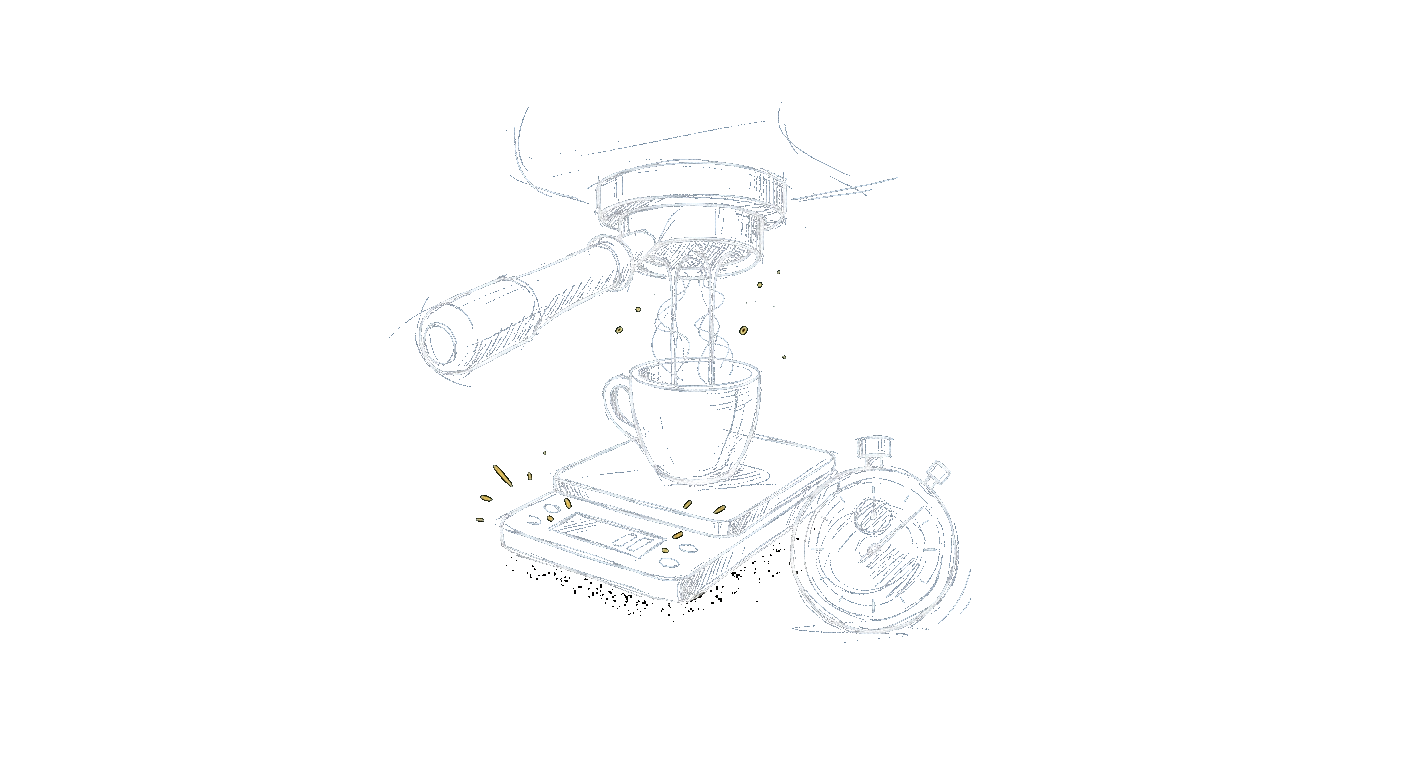
What is the dose-yield-time framework and why does it matter?
Three numbers define every shot of espresso: the dose (ground coffee you put in), the yield (liquid espresso in the cup), and the time the shot takes. Most home baristas start with a 1:2 ratio, say 18 grams in, 36 grams out, and aim for a 25-to-30-second pull. This framework gives you a repeatable baseline. Once you lock in dose and yield, the grind becomes your main variable. Without a consistent ratio you’re guessing; with one you can isolate what’s actually wrong with the shot.
How to set your starting dose and yield?
Pick a dose that fits your basket. Most standard double baskets hold 16 to 20 grams. Weigh your grounds carefully, a cheap digital scale that reads to 0.1 gram is essential. Start with a 1:2 yield: if you use 18 grams of coffee, stop the shot when the scale shows 36 grams of liquid. Don’t chase the old Italian rule of a one-ounce shot. Modern specialty espresso works best with a little more water. Adjust the yield only after you’ve dialed in the grind, and only if the taste is consistently under- or over-extracted.
How to time your shot and what should you look for?
Start the timer when you flip the pump switch or push the button. Time to first drops, called pre-infusion, matters, but the main timer is from pump-on until you hit your target yield. A 25-to-30-second total is a good target for a medium-roast bean. If the shot runs faster than 25 seconds, your grind is probably too coarse. If it drags past 35 seconds, the grind is too fine. Watch the stream: a steady, honey-like flow that stays blond (pale yellow) only in the last few seconds is a sign of even extraction.
How to read the stream: blonding, channeling, and extraction clues
The stream tells you a lot before you even taste. Early blonding, when the liquid turns pale and watery halfway through the shot, often means the grind is too coarse or the dose is too low. Channeling shows up as a fast, transparent stream on one side while the rest drips slowly; it usually means poor puck prep or a grind that’s too fine. A well-extracted shot starts dark brown and stays syrupy until the last few seconds, then gradually blondes. If the stream spits or sprays, you likely have channeling. Fix this by distributing the grounds more evenly in the basket before tamping.
How to adjust grind size based on what you see and taste
Change the grind, not the dose or yield, until the shot timer falls into the 25-to-30-second window. If it runs fast, make the grind finer. If it runs slow, make it coarser. Make small adjustments, a 1/8 turn on most home grinders, and pull another shot immediately. Taste is the final judge. Sour, lemony espresso means under-extraction: grind finer. Harsh, ashy bitterness means over-extraction: grind coarser. If the shot is both sour and bitter, you may have channeling, fix the puck prep first, then tweak the grind. Never change more than one variable at a time or you won’t know what worked.
How to fine-tune with dose or temperature after the grind is close
Once the grind is in the right ballpark and the time is 25–30 seconds, you can nudge the dose by 0.5 grams or adjust your machine’s brew temperature by a degree or two. A slightly higher dose for the same yield makes a thicker, more intense shot; a lower dose makes it cleaner and brighter. Temperature adjustments are more effective with light-roast beans, which need more heat to extract fully. With dark roasts, lowering the temp can reduce bitterness. But always dial in the grind first, temperature and dose are fine-tuning tools, not shortcuts.
Frequently asked questions
How long should a shot of espresso take?
For most home setups, aim for 25 to 30 seconds from pump-on to your target yield. Very light roasts may run a few seconds longer; very dark roasts a few seconds shorter.
What does sour espresso mean and how do I fix it?
Sour espresso usually means the coffee is under-extracted, not enough water has passed through to pull out the sugars. Grind finer to slow the flow and increase extraction.
What does bitter espresso mean?
Bitter, ashy, or harsh espresso usually means over-extraction, too much water has dissolved undesirable compounds. Grind coarser to speed up the flow and reduce extraction.
Should I change dose or grind first?
Always change grind first. Dose and yield affect the final strength and flavor, but grind has the biggest impact on flow rate and evenness. Lock in dose and yield, then adjust grind until time and taste are right.
What’s the difference between pre-infusion and extraction time?
Pre-infusion is the low-pressure wetting phase before full pressure hits, it softens the puck and reduces channeling. The extraction time I refer to includes pre-infusion. Most home machines have a fixed pre-infusion of a few seconds; don’t count it separately unless your machine lets you control it.
How do I know when my grind is too fine or too coarse?
If the shot chokes (only drips or nothing comes out for 15+ seconds), the grind is too fine. If it gushes out in under 15 seconds, the grind is too coarse. The stream should look like warm honey, not water or tar.