Semi-automatic vs super-automatic espresso
Updated June 2026Independently researchedNo paid placement.
If you value hands-on control and want to push the limits of espresso quality, a semi-automatic machine is your best bet. If you prioritize speed, consistency, and one-touch convenience, a super-automatic will serve you better. The right choice depends entirely on your willingness to learn the craft versus your desire for a hassle-free routine.
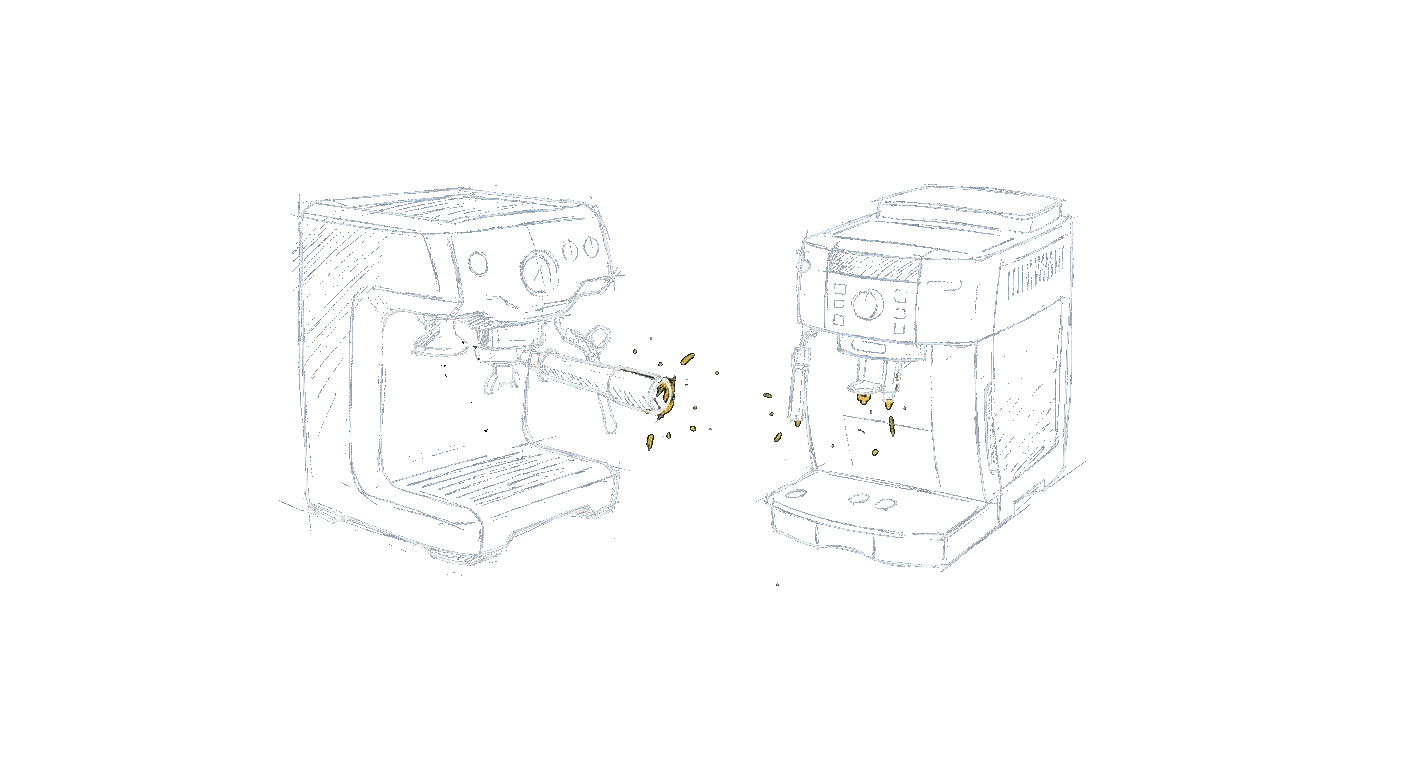
What's the difference between semi-automatic and super-automatic espresso machines?
At their core, the difference comes down to who does the work. A semi-automatic machine requires you to grind the coffee, dose it into the portafilter, tamp it evenly, and then start and stop the extraction manually. The pump pressure is automatic, but you control the shot timing by hitting a button or flipping a switch. A super-automatic machine, by contrast, does nearly everything for you. You fill a hopper with whole beans and a tank with water, then press a button for your chosen drink. The machine grinds, doses, tamps, extracts, and often steams milk, all without your intervention. Some models even let you adjust grind size, dose, and temperature via a screen, but the machine handles the execution.
Which one makes better espresso?
The ceiling for espresso quality is higher with a semi-automatic machine. Because you control every variable, grind size, dose, tamp pressure, and extraction time, you can dial in a shot that brings out the best in a particular bean. Skilled home baristas routinely produce espresso that rivals specialty coffee shops. Super-automatic machines are designed for consistency, not peak potential. They use preset parameters that aim for a decent, repeatable shot every time. While high-end super-automatics have improved greatly, they still can’t match the nuance and depth a skilled person can achieve with a semi-automatic. If your goal is the absolute best shot possible, you’ll want a semi-automatic.
How much effort and time does each require?
A semi-automatic machine demands a daily ritual of grinding, dosing, leveling, tamping, and cleaning the portafilter. Pulling a shot and steaming milk might take three to five minutes once you’re practiced, but the first few weeks involve learning curves and dialing in. It’s a hobbyist’s workflow, not a grab-and-go routine. A super-automatic machine cuts that time to under a minute per drink. You press a button, and the machine does the rest, grinding, extracting, and even dispensing frothed milk. Cleanup is often just wiping a drip tray and an occasional rinse cycle. For busy mornings when you just want your coffee without thinking, a super-automatic is hard to beat.
What about maintenance and cleaning?
Super-automatic machines have more internal moving parts, grinder, brew group, milk frother, and often a built-in cleaning cycle. These require regular deep cleaning to prevent clogs and scale buildup. The brew group may need to be removed and rinsed daily, and descaling is more involved. Failure to maintain can lead to costly repairs. Semi-automatic machines are simpler mechanically. You still need to backflush with a cleaning tablet periodically, descale the boiler, and wipe down the steam wand after every use. But there are fewer nooks where coffee oils and milk residue can hide. Many baristas find the hands-on cleaning straightforward and less prone to surprises than a super-automatic’s hidden components.
Who is a semi-automatic machine best for?
A semi-automatic machine shines for coffee enthusiasts who enjoy the process. If you like experimenting with different beans, adjusting grind size to chase the perfect shot, and learning the nuances of extraction, this is your path. It also suits anyone who wants to learn latte art, the manual steam wand gives you full control over milk texture. It’s less ideal for households where multiple people use the machine without instruction, or for anyone who just wants a fast, reliable cup without fuss. Semi-automatics also require a separate grinder (most don’t include one), adding both cost and counter space.
Who is a super-automatic machine best for?
Super-automatic machines are perfect for busy professionals, families with varied drink preferences, and anyone who prioritizes speed over ritual. If you often make multiple milk-based drinks in a row, lattes, cappuccinos, macchiatos, a super-automatic can deliver them with minimal effort. They’re also great in offices or shared spaces where consistency matters more than artistry. The trade-off is that you sacrifice the ability to tweak variables for a single perfect shot. And if you enjoy the meditative, hands-on aspect of making espresso, a super-automatic may feel too automated. But for those who value convenience above all, it’s a worthy investment.
Frequently asked questions
Can a super-automatic machine make latte art?
Generally no, because super-automatic machines froth milk automatically, often through a built-in steam wand or a proprietary frother, and don’t allow the fine manual control needed to create microfoam for latte art. Some high-end models let you steam manually, but that’s rare.
Are semi-automatic machines harder to use?
They have a steeper learning curve than super-automatics, especially for grind setting, dosing, and tamping. But many home baristas find the process rewarding, and with a few weeks of practice, pulling a decent shot becomes routine. The effort is part of the appeal.
Do super-automatic machines use more electricity?
Both types use similar amounts of electricity for heating water and brewing. Super-automatics often have power-saving modes that reduce standby consumption, but the difference is small. The larger energy cost comes from keeping the machine warm and ready, which applies to both.
Can I use pre-ground coffee in a super-automatic machine?
Most super-automatics are designed for whole beans and have a built-in grinder. Some models include a bypass doser that lets you add pre-ground coffee for a single shot, but it’s not the primary method. Using pre-ground in the main hopper can damage the grinder.
Which type of machine lasts longer?
Both can last many years with proper care. Semi-automatics tend to have fewer complex parts and are easier to repair; many users keep them for a decade or more. Super-automatics have more components that can fail, but high-end brands often offer good support. Maintenance habits matter more than the type.
Is a semi-automatic machine cheaper than a super-automatic?
Entry-level semi-automatic machines are very affordable, often costing a few hundred dollars, and you’ll need a separate grinder. Super-automatics start at a higher price point and top out much higher, but they include the grinder and all functions. The total cost depends on the features and quality you choose.