Electric vs gas pressure washer
Updated June 2026Independently researchedNo paid placement.
If you need convenience, low maintenance, and quiet operation for light to medium cleaning around the house, an electric pressure washer is the best choice. For heavy-duty, high-flow jobs like stripping paint or cleaning large driveways, a gas model offers unmatched power and portability even on remote job sites.
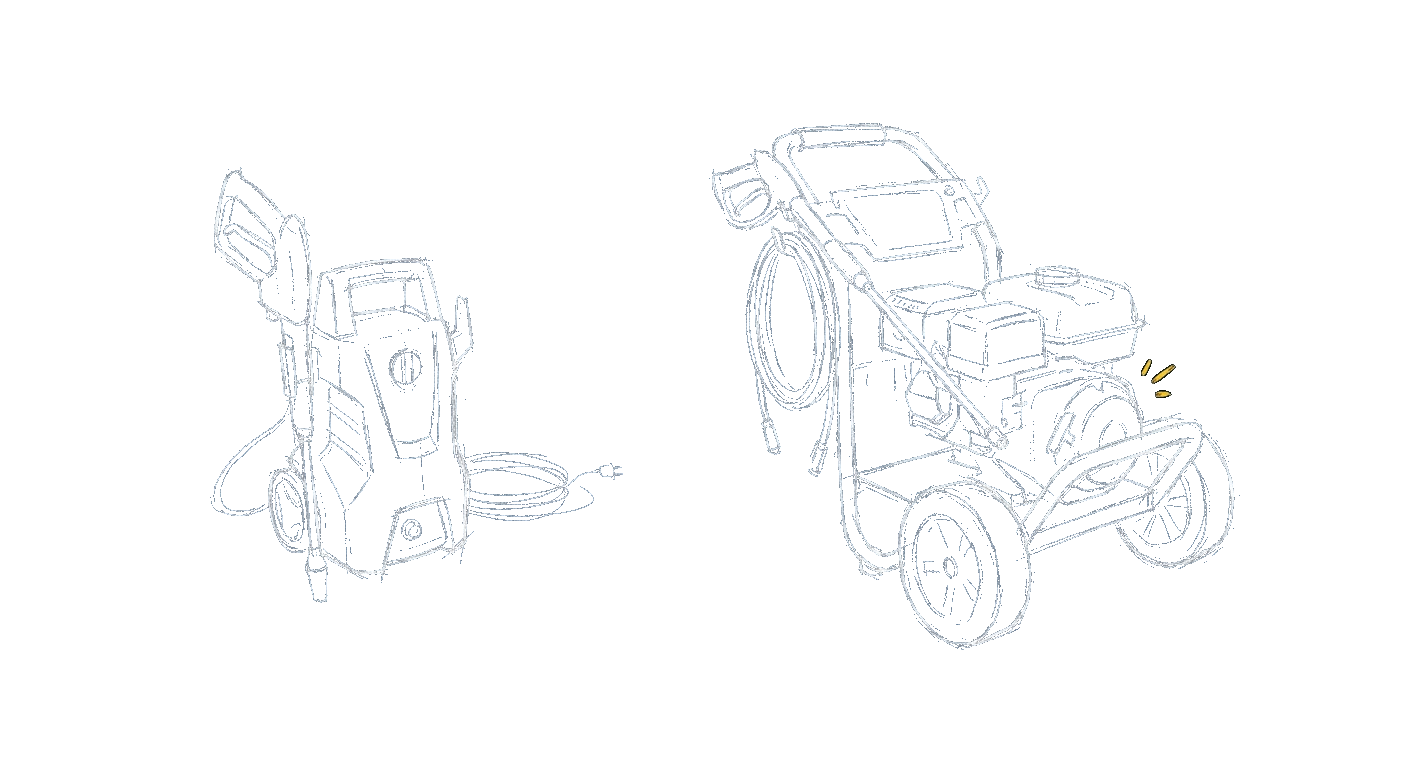
How do power and water flow differ between electric and gas models?
Electric pressure washers run on standard household current and typically produce between 1.2 and 2.0 gallons per minute (GPM) with pressures around 1,500 to 2,000 PSI. That’s plenty for washing cars, cleaning patio furniture, and blasting mildew off siding. Gas models, on the other hand, use combustion engines and commonly deliver 2.5 to 4.0 GPM and 2,800 to 4,000 PSI. The higher flow rate is what makes gas washers faster at rinsing and better at moving thick debris. The real-world difference: a gas unit can knock caked-on mud off heavy equipment and strip old paint in a fraction of the time it would take an electric machine. But for routine home maintenance, many owners find that the extra power of gas is simply overkill and not worth the added costs.
How do noise levels and emissions compare?
Electric pressure washers are remarkably quiet, typically in the 60 to 70 decibel range, about as loud as a normal conversation. You can use one early in the morning or in a tight suburban yard without disturbing neighbors. Gas engines are much louder, often pushing 85 to 95 decibels, which means hearing protection is a must and use during quiet hours is out of the question. Emissions are another major split. Electric models produce zero exhaust fumes, so they’re safe to use in enclosed spaces like garages or basements as long as you manage the water runoff. Gas engines emit carbon monoxide and other pollutants, which means you must always operate them outdoors with plenty of ventilation. If you’re environmentally conscious or live in a community with noise ordinances, electric is the clear winner here.
What is the maintenance burden for each type?
Electric pressure washers demand almost no ongoing maintenance. You just store the unit indoors, drain the water after each use, and occasionally check the spray wand for clogs. Some models require you to flush the pump with an antifreeze solution if storing for winter, but that’s about it. No oil changes, no spark plugs, no fuel issues. Gas pressure washers require consistent upkeep. You’ll need to change the oil every 50 hours or so, replace spark plugs, and stabilize fuel to prevent clogging the carburetor. If you let gas sit in the tank for months without a stabilizer, you’ll likely face carburetor problems that require professional cleaning. Owners who use their washers only a few times a year often find this maintenance a deterrent.
Which pressure washer handles heavy-duty cleaning better?
When the job calls for stripping heavy paint, cleaning large concrete driveways, or blasting embedded dirt off farm equipment, gas pressure washers are the proven workhorses. Their higher PSI and GPM mean you can work faster and use wider spray patterns without losing cleaning force. Brands like Simpson and Honda have reputations for reliability under sustained, high-volume use. Electric models can handle tough duty too, but they take longer and may struggle with deeply embedded grime or thick layers. For example, a gas washer can clean a 500-square-foot driveway in under an hour; an electric unit might need twice that time and require more passes. If you’re a homeowner with occasional heavy tasks, a premium electric unit (like those from Karcher or Ryobi) might still be sufficient, but for regular heavy work, gas is the better tool.
Which is more convenient for everyday home use?
Electric pressure washers are undeniably more convenient for most homeowners. They start with the push of a button (no recoil cord), weigh around 30 pounds or less, and take up very little storage space. You plug them into a standard outlet, attach a garden hose, and you’re ready to go in seconds. For quick jobs like washing a car or cleaning the patio, electric models let you finish without the hassle of fueling up, mixing stabilizer, or dealing with an engine that’s hard to start. Gas models require more setup: checking oil, filling the gas tank, and often several pulls on a recoil starter. They also need a flat, well-ventilated area and can’t be easily carried over rough terrain. Many gas units are two to three times heavier than electric ones, which makes them less practical for frequent, light-duty work. If you’re the type who wants to grab the washer and go, electric wins hands down.
Which one offers better long-term value?
Over the life of the machine, electric pressure washers typically cost less both upfront and in ongoing expenses. Their purchase price is lower (often a few hundred dollars for a capable model), and because there are no oil changes, fuel costs, or carburetor repairs, the total cost of ownership stays modest. A well-cared-for electric unit can last several years with minimal investment. Gas pressure washers tend to be more expensive to buy (often several hundred dollars more for comparable brand quality), and they carry recurring costs for fuel, oil, spark plugs, and potential engine repairs. On the other hand, gas machines can also last many years if maintained properly, and their higher cleaning speed can save valuable time on big projects. For someone who uses a pressure washer only a few weekends a year, the long-term value of an electric model is hard to beat. For a contractor or a homeowner with vast, demanding surfaces, gas’s productivity may justify its higher total cost.
Frequently asked questions
Can an electric pressure washer be as powerful as a gas one?
Not really. Even the strongest residential electric models top out around 2.0 GPM and 2,000 PSI, while gas machines can produce 4.0 GPM and 4,000 PSI. For light to medium cleaning, electric power is often sufficient, but for heavy jobs gas remains substantially more effective.
Is it worth buying a gas pressure washer just for occasional use?
If you only plan to use it a few times a year for routine tasks like car washing or deck cleaning, an electric model is usually a better fit. Gas units require regular upkeep that becomes a hassle when sitting idle for months at a time.
Do electric pressure washers use less water?
Yes, typically. Electric models average around 1.5 GPM, while gas washers average 2.5 to 4.0 GPM. That means electric units use less water per minute, which can be an advantage in areas with water restrictions or if you want to minimize runoff.
Which type is easier to start?
Electric models start instantly with a simple trigger or power switch. Gas models require pulling a recoil starter multiple times, and the process can be finicky in cold weather or if the engine has been sitting. Electric wins on ease of starting every time.
Are gas pressure washers safe to use indoors?
No. Gas engines produce carbon monoxide and other toxic fumes, so they must only be used outdoors in well-ventilated areas. Electric pressure washers produce no emissions and can be used inside garages or basements as long as you manage water runoff safely.
Can I use an electric pressure washer with an extension cord?
Yes, but you need a heavy-duty, outdoor-rated extension cord of the shortest length possible. Using a cord that is too long or too thin can cause voltage drop, reducing the washer’s performance or tripping breakers. Check the manufacturer’s cord gauge recommendations to avoid trouble.