Pressure washer nozzle guide
Updated June 2026Independently researchedNo paid placement.
Pressure washer nozzles are color-coded by spray angle: red (0°), yellow (15°), green (25°), white (40°), and black (low-pressure detergent). The narrower the angle, the more concentrated the pressure, so red is for stubborn stains on tough surfaces like concrete, while white is gentle enough for cars and wood. Always match the nozzle to the surface you're cleaning to avoid damage.
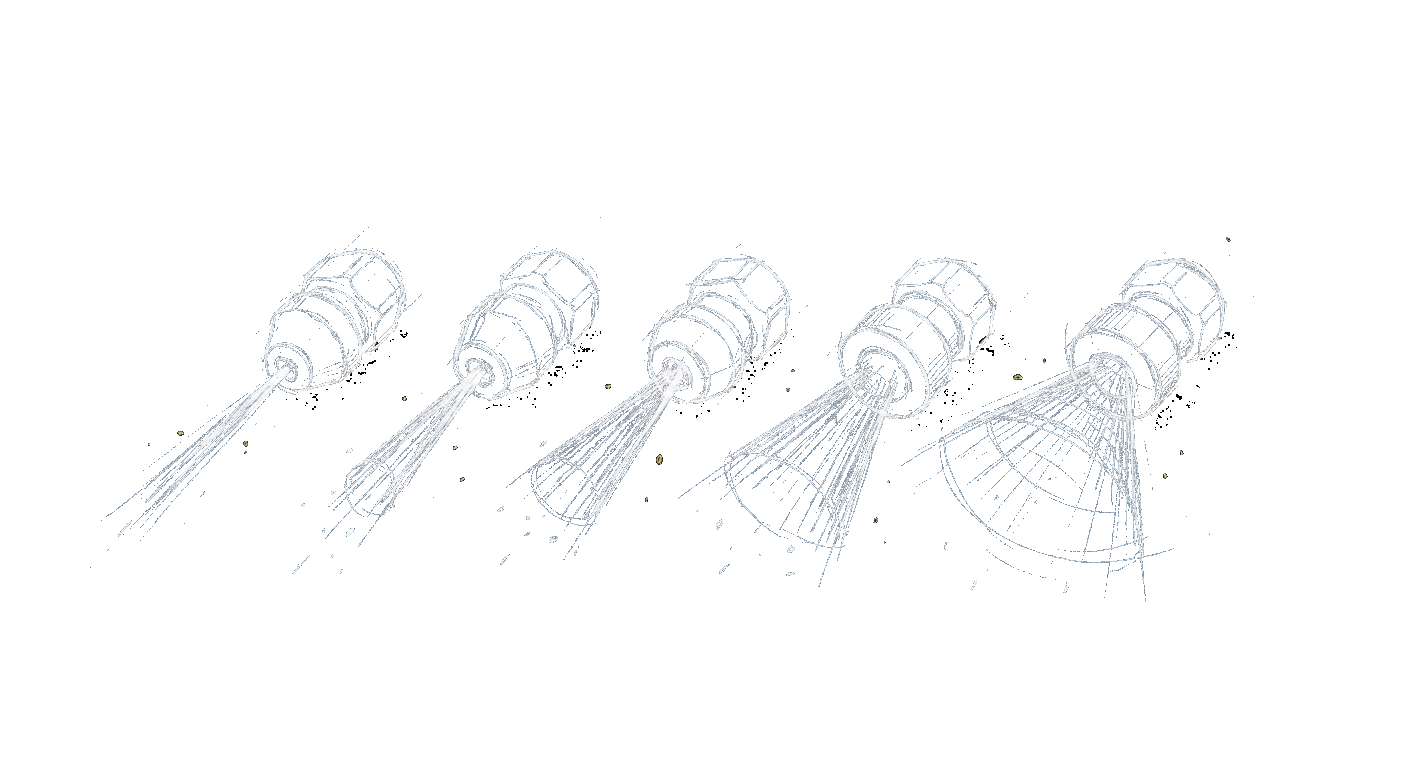
What do the nozzle colors mean?
The color system is a near-universal standard among residential pressure washers, though a few brands may vary. Red, yellow, green, white, and black each indicate a fixed spray angle, which determines how wide the fan spreads. That fan width directly affects the pressure per square inch: narrower angles concentrate the force, wider angles spread it out. Red (0°) is a pinpoint stream, extremely aggressive, meant for heavy rust, paint stripping, or caked-on mud on concrete. Yellow (15°) is still powerful but slightly broader, good for tough grime on driveways and brick. Green (25°) is a good all-purpose choice for general siding, fences, and patios. White (40°) is the gentlest high-pressure tip, ideal for soft surfaces like cars, windows, and wood. Black (soap nozzle) delivers detergent at low pressure, allowing the cleaner to sit and work before rinsing.
Which nozzle should I use for concrete and brick?
For concrete driveways, sidewalks, and brick walls, start with the green (25°) nozzle. It removes typical dirt and mildew without risking grooves in the surface. If you’re tackling oil stains or thick grime, the yellow (15°) nozzle provides more bite while still being safe for most cured concrete. Resist the urge to jump straight to the red (0°) nozzle, it can etch and scar concrete if held too close or held still. Use it only for isolated spot stains and keep the wand moving. For brick, stay with green or white, since soft brick joints can erode quickly under higher pressure.
What's the safest nozzle for car washing?
The safest choice for washing a car is the white (40°) nozzle. Its wide fan reduces the chance of stripping wax or damaging the clear coat. Hold the nozzle at least a foot away from the paint and keep it in constant motion. Never use red, yellow, or even green on a vehicle’s painted surfaces. If your pressure washer has a black soap nozzle, use that for applying car-wash detergent, then switch to white for rinsing. For the wheels, a green or yellow nozzle can be used on tires and wheel wells, but keep the red away from brake calipers and delicate alloy rims.
How do spray angles affect pressure?
Spray angle and pressure have an inverse relationship: the narrower the angle, the higher the force directed into a smaller area. A red 0° nozzle delivers the full machine pressure onto a spot the size of a dime, making it deadly effective, and dangerous. A white 40° nozzle spreads that same force over a much larger area, so the per-square-inch impact is mild. Think of it as the difference between pressing a thumbtack and flattening your palm. The total output of the pressure washer doesn’t change; only the concentration of that force changes. That’s why you can safely clean a delicate surface with a wide-angle nozzle even with a high-GPM machine.
Can I use a pressure washer nozzle on wood decks?
Wood decks are tricky because softwoods like pine and cedar can be easily furrowed by a tight spray. Start with the white (40°) nozzle and test an inconspicuous area. Keep the nozzle about 18 inches away and move in the direction of the wood grain. Never use red or yellow on any wood deck, they will gouge the surface. Hardwoods such as ipe or mahogany handle a bit more force, but green is still the upper limit. For best results, apply a deck cleaner with the black soap nozzle, let it sit, then rinse with white. Avoid holding the spray in one spot, and never use a turbo nozzle on wood.
Are there any nozzle exceptions or specialty tips?
Some machines come with a variable-pressure wand or a turbo nozzle that rotates the stream for a cleaning circle. While convenient, these can be less predictable than the fixed color set. A turbo nozzle typically starts at a 0° core and widens, so it can be as aggressive as red if you stop moving. A few manufacturers, like those using a quick-connect system, follow the same color standard, but always verify the markings on the tip itself if you buy replacement nozzles. Specialty tips for undercarriage cleaning or surface cleaners exist, but for most home jobs, the five-color set covers everything you need.
Frequently asked questions
What does each pressure washer nozzle color mean?
Red (0°) is a pinpoint blast for heavy stripping, yellow (15°) is a narrow fan for tough grime, green (25°) is an all-purpose fan for siding and concrete, white (40°) is a wide gentle fan for cars and wood, and black (soap) delivers detergent at low pressure.
Can I use a red nozzle on a car?
No. The red 0° nozzle is far too aggressive for automotive paint, it can cut through clear coat and even chip paint. Stick with the white (40°) nozzle for cars and always keep the wand moving.
How do I know which nozzle I have if the color is worn off?
Check the tip for a small number engraved on the metal, like ‘0’, ‘15’, ‘25’, or ‘40’. On the black soap nozzle, look for a large opening or the word ‘soap’. When in doubt, test the spray pattern on a concrete surface before using it on something delicate.
Is a turbo nozzle better than the colored tips?
A turbo nozzle spins the stream, creating a circular cleaning path that can save time, but it’s not better for every job. The rotating spray is still very aggressive and can damage soft surfaces. Use it only on tough concrete or brick, and keep it moving.
Can I use a nozzle from a different brand on my pressure washer?
Yes, as long as the connector size matches, typically 1/4-inch quick-connect or M22 threaded. Most residential pressure washers use the same color standard, so you can swap brands freely. Just confirm the angle markings and avoid cheap unbranded tips that may not match the standard.
Does a higher PSI pressure washer need a different nozzle?
Not a different color standard, but you may need to step down one level of aggressiveness. If you have a very high-PSI machine, a green nozzle on that unit may feel like a yellow on a lower-PSI unit. Always test any nozzle on an inconspicuous spot first and increase distance if needed.